Template preview will appear here.
Free editable template
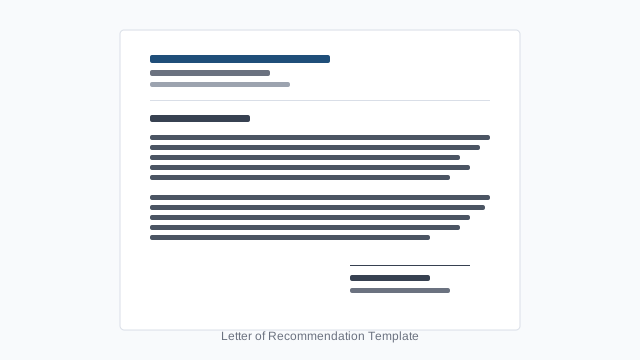
Letter of Recommendation Template
Download a professional letter of recommendation template for Word, PDF, and Google Docs. Choose from dozens of customizable recommendation letter samples for students, employees, graduate school, scholarships, and more — all free to edit and download.
Template library
All recommendation letter templates
Browse editable recommendation letter templates for academic applications, scholarships, employee references, internships, coworker endorsements, personal character references, and recommendation request letters. Each template includes a preview, replaceable fields, and downloadable DOC, PDF, and text formats.
Complete guide
What Is a Letter of Recommendation Template?
A letter of recommendation template is a pre-formatted document that helps recommenders write a strong, well-structured reference letter quickly and effectively. Instead of starting from a blank page, you can use a recommendation letter template to ensure you cover all the essential sections — introduction, relationship to the applicant, specific examples, key strengths, and a clear closing endorsement. Whether you need a letter of recommendation template for a student, an employee reference, or an academic endorsement, using a professional template saves time while improving the quality and persuasiveness of the final letter.
Why Use a Letter of Recommendation Template?
Writing a recommendation letter from scratch can be intimidating. Many recommenders struggle with where to start, what details to include, and how to structure the letter so it makes a strong impression on admissions committees, hiring managers, or scholarship boards. A well-designed recommendation letter template solves these problems by providing a proven framework that you can customize with specific details about the candidate. The benefits include consistent formatting, proper tone, appropriate length, and coverage of all the factors that reviewers look for in a strong reference.
According to College Board, recommendation letters are among the top factors considered in college admissions, alongside grades and test scores. A template ensures your letter hits all the right points without rambling or missing critical information. Similarly, the U.S. Bureau of Labor Statistics notes that professional references remain a standard part of hiring processes across nearly every industry. Using a professional recommendation letter for employee template can make the difference between a generic endorsement and one that genuinely helps the candidate stand out.
Key Components of a Strong Letter of Recommendation Template
Every effective letter of recommendation template should include the following essential components. Understanding these sections will help you choose the right template and customize it effectively for each candidate.
Header and contact information
The template should include space for the recommender's name, title, organization, email, and phone number, along with the date and recipient's information.
Introduction paragraph
A strong opening states who you are recommending, your relationship to them, and how long you have known them. It should also include a clear statement of endorsement.
Body paragraphs with examples
The body should provide specific examples and anecdotes that demonstrate the candidate's skills, character, work ethic, and achievements. Use the STAR method — Situation, Task, Action, Result — to structure each example.
Comparison and ranking
Strong templates include a sentence or paragraph comparing the candidate to their peers, giving the reader context for how exceptional the candidate truly is.
Personal qualities and soft skills
Beyond technical skills and achievements, the template should guide you to discuss the candidate's character, reliability, communication, teamwork, and growth potential.
Closing and contact offer
The final paragraph should restate the strong endorsement, summarize the key points, and offer to provide more information if needed, followed by a professional closing and signature.
How to Customize Your Letter of Recommendation Template
While a free letter of recommendation template provides an excellent starting point, customization is what makes the letter truly compelling. A generic template letter will not have the same impact as one that is personalized with specific details about the candidate. Follow these steps to customize your template effectively:
First, gather information about the candidate and the opportunity. What program or position are they applying for? What skills and qualities are most important for that role? What is your relationship to the candidate, and in what context have you worked together? The more context you have, the better you can tailor the letter. If you are writing for a student applying to graduate school, focus on academic ability, research potential, and intellectual curiosity. For an employee seeking a new job, emphasize professional achievements, teamwork, leadership, and reliability. Our graduate school recommendation letter sample and job application recommendation letter sample show how these differences play out in practice.
Second, replace all placeholder text with specific examples and details. Instead of saying the candidate is "a hard worker," describe a specific project they led, a challenge they overcame, or a goal they exceeded. Use numbers and metrics where possible — quantifying achievements makes them more concrete and impressive. Mention the candidate by name several times throughout the letter, and connect their strengths directly to the requirements of the position or program they are applying for.
Third, adjust the tone and language to match your authentic voice. A recommendation letter should sound like you, not like a generic form letter. Read it aloud and make sure it reflects how you would actually speak about the candidate. If you would use more casual language in a professional context, adjust the template accordingly. If you prefer a more formal tone, make sure the template matches that style. The goal is a letter that is professional, well-structured, and genuinely personal.
Types of Letter of Recommendation Templates
Not all recommendation letters are the same. Different situations call for different types of letters, each with its own focus, tone, and structure. Understanding the different types will help you select the right recommendation letter template for your needs.
Academic recommendation letter
Used for college, graduate school, or academic program applications. Written by professors, teachers, or advisors. Focuses on academic performance, research potential, and intellectual ability. Browse our student recommendation letter templates for examples.
Employment recommendation letter
Used for job applications and promotions. Written by managers, supervisors, or colleagues. Focuses on work performance, skills, reliability, and professional achievements. See our employee recommendation letter template for a professional example.
Scholarship recommendation letter
Used for scholarship and fellowship applications. Written by teachers, mentors, or community leaders. Focuses on achievements, leadership, character, and potential. Our scholarship recommendation letter template is designed for this purpose.
Character reference letter
Used for personal references, court proceedings, housing applications, or community roles. Written by friends, neighbors, or community members. Focuses on personal character, integrity, and reliability. Try our personal recommendation letter template.
Graduate school recommendation
Specifically tailored for master's and PhD program applications. Emphasizes research experience, academic rigor, and potential for advanced study. Review our graduate school recommendation letter sample for guidance.
Medical school recommendation
Designed for medical school applications, requiring specific focus on clinical experience, patient interaction, scientific understanding, and professionalism. Medical schools often have specific requirements for recommendation letters.
Letter of Recommendation Template Best Practices
To get the most out of your letter of recommendation template, follow these best practices used by professional recommenders and admissions experts.
First, keep the letter to one page. Admissions officers and hiring managers are busy and often read dozens or hundreds of recommendation letters. A concise, well-structured one-page letter is more likely to be read carefully and remembered. Aim for 400–700 words, organized into 4–6 paragraphs. If you need more space, consider whether you are including relevant details or simply repeating points already made.
Second, use specific examples rather than general praise. Anyone can say a candidate is "hardworking" or "intelligent." What makes a recommendation letter memorable and persuasive is providing concrete evidence. Describe a specific time the candidate demonstrated that quality. For example, instead of "she is a great leader," write "when our team faced a critical deadline, she organized the workload, motivated her colleagues, and delivered the project two days early, earning praise from the client."
Third, tailor each letter to the specific opportunity. A law school recommendation letter template should emphasize analytical thinking, writing ability, and advocacy skills, while a medical school letter should focus on scientific aptitude, empathy, and clinical experience. Research the program or position to understand what qualities they value most, and make sure your letter highlights those specific qualities.
Fourth, be honest and avoid exaggeration. Admissions committees and hiring managers can spot inflated praise immediately, and it undermines your credibility as a recommender. It is perfectly acceptable to mention areas for growth or areas where the candidate has improved — this shows you are thoughtful and honest, and it makes your praise of their strengths more believable.
How to Ask for a Letter of Recommendation
If you are the person needing a recommendation, understanding how to ask properly can significantly improve the quality of the letters you receive. The best recommenders are people who know you well and can speak to your specific strengths with concrete examples. Choose recommenders who have worked closely with you in a relevant capacity — a professor whose class you excelled in, a supervisor who oversaw your best work, or a mentor who guided your development.
When asking for a recommendation, do so well in advance — ideally four to six weeks before the deadline. Provide your recommender with all the information they need: your resume or CV, the program or job description, a brief summary of your relevant achievements, and any specific points you would like them to address. Offer to provide more information or meet to discuss it. The Harvard Office of Career Services recommends preparing a short summary of your goals and accomplishments to share with your recommender. And of course, always send a thank-you note afterward, regardless of the outcome. For more detailed guidance, read our article on how to ask for a recommendation letter.
Frequently Asked Questions About Letter of Recommendation Templates
Are recommendation letter templates effective?
Yes, when properly customized. Templates provide structure and ensure you cover all essential elements. The key is personalizing the content with specific examples and details about the candidate so the letter feels genuine and unique.
How long should a recommendation letter be?
A strong recommendation letter is typically one page or 400–700 words. It should be long enough to provide specific examples and make a compelling case, but concise enough to hold the reader's attention.
Can I use the same template for different candidates?
You can use the same template structure, but you must customize the content for each candidate. Each letter should include unique examples, specific details, and a personal tone that reflects your actual experience with that individual.
What format should a recommendation letter be in?
Most recommendation letters follow a standard business letter format with a header, salutation, body paragraphs, closing, and signature. Word DOC and PDF are the most common formats for submission.
Start with Our Free Letter of Recommendation Template
Ready to write a standout recommendation letter? Browse our collection of free, professionally designed letter of recommendation templates above. Whether you need a general recommendation letter template, a professor recommendation letter sample, or a manager recommendation letter template, you will find a template that fits your needs. Each template is fully customizable, available in Word and PDF formats, and designed to help you write a compelling, effective recommendation letter quickly and confidently.
If you are still learning how to write a strong recommendation letter, check out our comprehensive recommendation letter writing guide for step-by-step instructions, tips, and examples. You can also browse our letter of recommendation sample library to see finished examples across different use cases and industries.